
Find fraudulent expenses before they are reimbursed.
Surface inflated totals, duplicate submissions, AI-generated receipts and manipulated invoices in employee expense reports. For controllers, accounts payable and T&E teams who can't check every receipt by hand.
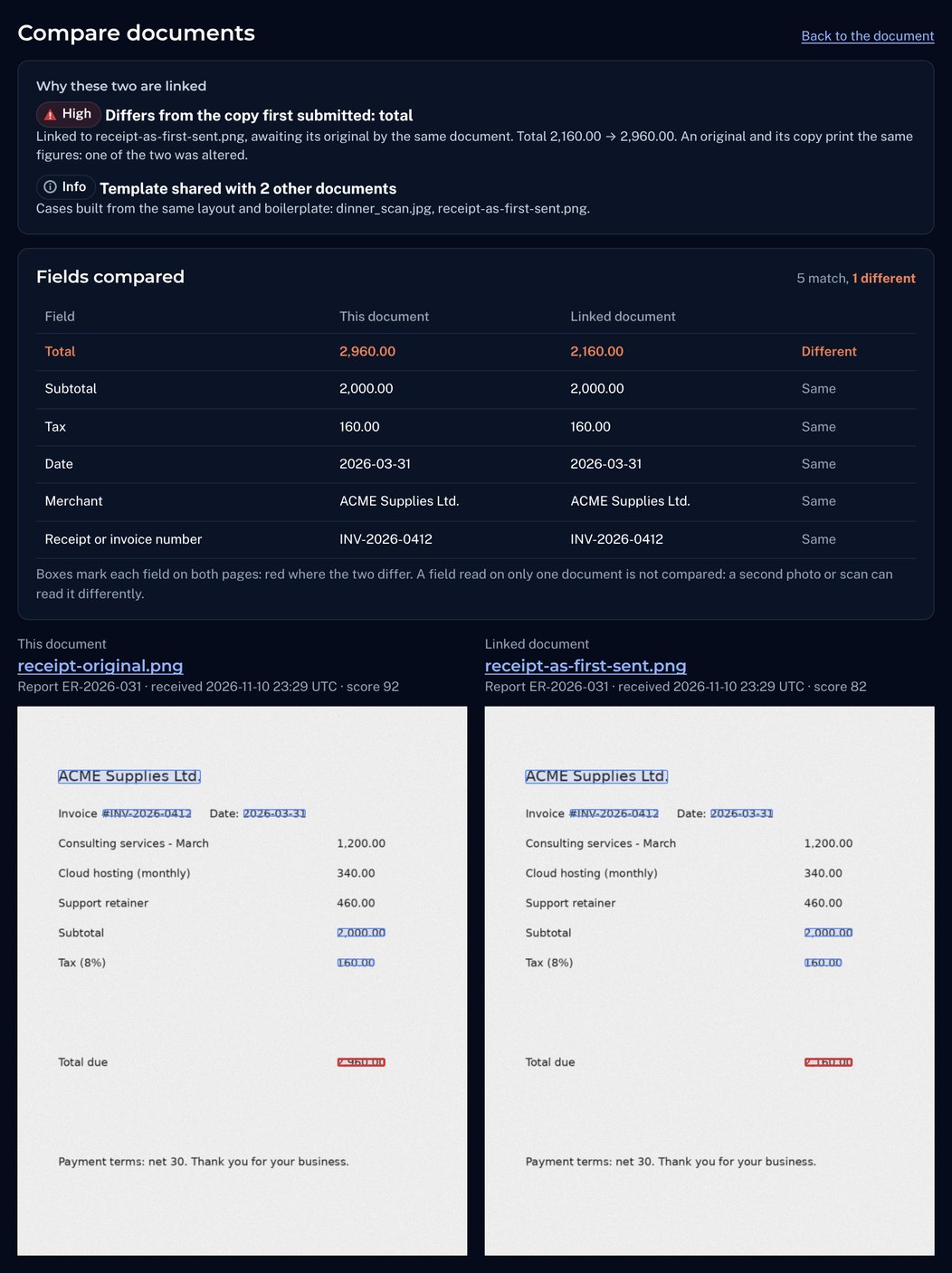
The original receipt, beside the copy.
A reviewer asked for the original receipt. It came back with a different total. Celesis lines the two up, marks the changed figure on both, and says plainly what it could not compare: a field read on only one of them is not called changed.
- What changed, marked on both
- What is the same, field by field
- What could not be compared, and why
Nine ways a fake receipt gives itself away.
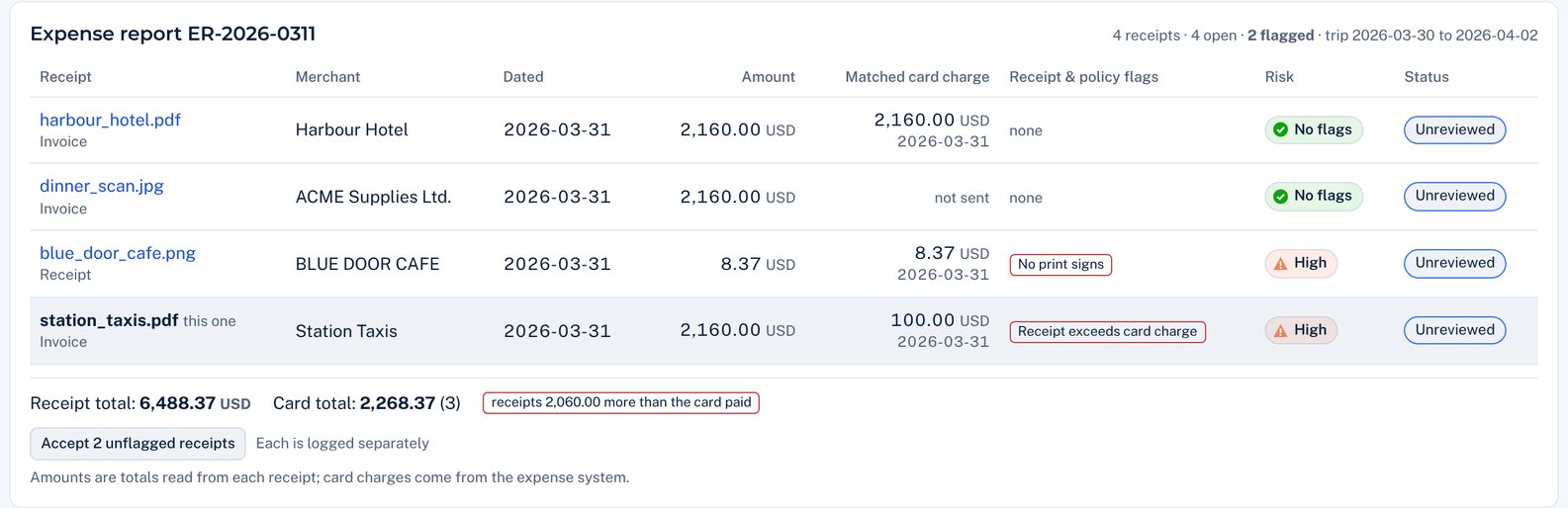
Each flag says what was found and what to check next. Your reviewers decide.
Edited receipts
A total, date or merchant was changed after the receipt was issued.
Never on paper
A till prints receipts. One drawn on a computer, or filled in on a receipt-generator website, wasn't printed by a till.
AI-made images
The image says it was made by an AI tool. Some AI tools sign what they make, and Celesis reads that signature.
Against the card
The receipt's total, date and merchant don't match the card charge your expense system sends with it.
Outside the trip
The receipt, or the photo of it, is dated before the trip started or after it ended.
Claimed twice
The same receipt turns up on another expense report, even as a new photo that reads differently, or its number is out of order with that merchant's other receipts.
Made-up business details
The merchant's VAT or tax number fails the check digits every real one carries. Checked for Italy, Germany, France, Spain, the UK and Australia.
Paid doesn't match
The amount paid, less any change, isn't the receipt's total, and nothing on it explains the difference.
Original and copy differ
You asked for the original receipt, and it doesn't match the copy first submitted: an amount, the date or the merchant changed.
Examples come from Celesis's sample documents. AI tools that don't sign what they make can't be named this way; the other checks still apply to their output.
More on fake receipt detection · Duplicate document detection
Every receipt checked. Only the exceptions reviewed.
Checking receipts by hand means checking a sample. Celesis checks all of them, groups them by report, raises only what needs a person, and lets the rest go through together.
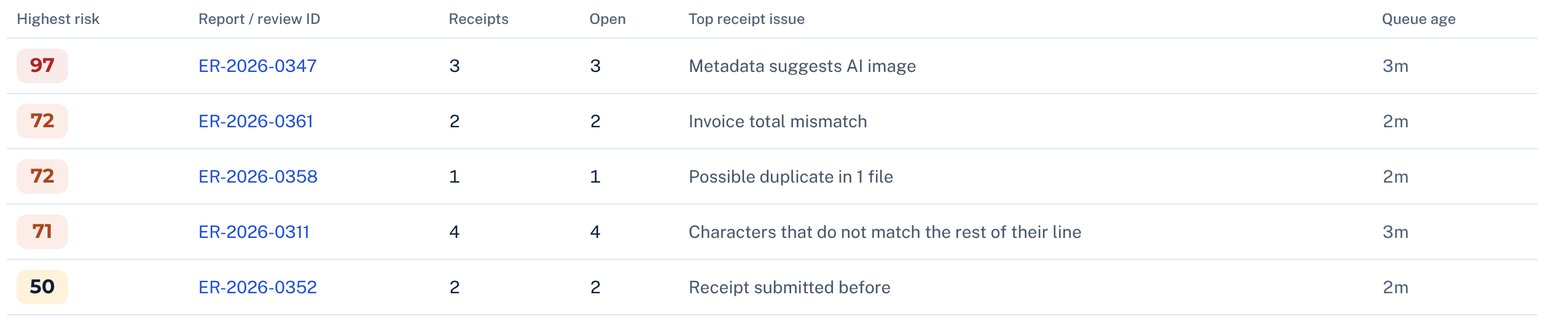
- Reports ranked by their riskiest receipt
- Approve a report's clean receipts in one step, each recorded
- Review starts at a higher score, to keep the queue small
- Reject a genuine receipt as personal, already reimbursed or over the limit
Alongside your expense system.
Receipts come in
Your expense system sends each receipt with its card charge and the trip's dates. Or upload them by hand.
Every receipt is tested
Within minutes, for edits, fabrication, the card, the trip and receipts claimed before.
The result goes back
A risk score and the reasons, in Celesis and back in your expense system. Policy rules stay where they are.
Receipts carry employees' personal data. Each customer's Celesis runs on its own, encrypted, with deletion on your schedule. Security · Privacy
Questions from finance teams
Which receipt formats does Celesis read?
Photos and scans (JPEG, PNG, TIFF, WebP), PDFs, and emailed receipts (.eml), whose sender's signature Celesis also checks.
How far does duplicate detection reach?
Every receipt is compared with every receipt already submitted to your organization's Celesis, across reports and employees, including a new photo of a receipt already claimed. Receipts are never compared across customers.
How does it connect to our expense system?
Your expense system sends each receipt, with its card charge and the trip's dates, through the Celesis API, and the score and findings go back. Receipts can also be uploaded by hand. Policy rules stay in your expense system.
How much reviewer time does it take?
Reviewers see the exceptions: reports come ranked by their riskiest receipt, review starts at a higher score than for insurance claims, and a report's clean receipts are approved together in one step.
What happens with an exception?
Each flag says what was found and what to check next. The reviewer accepts the receipt, asks the employee for the receipt or a confirmation, refers it to audit, or turns a genuine receipt down as personal, already reimbursed or over the limit. Every decision is recorded with who made it.
See what your documents aren't telling you.
See how Celesis surfaces fabricated, altered and reused receipts, explains each finding and lets the clean ones through. A focused 30-minute walkthrough; no sensitive documents required.